

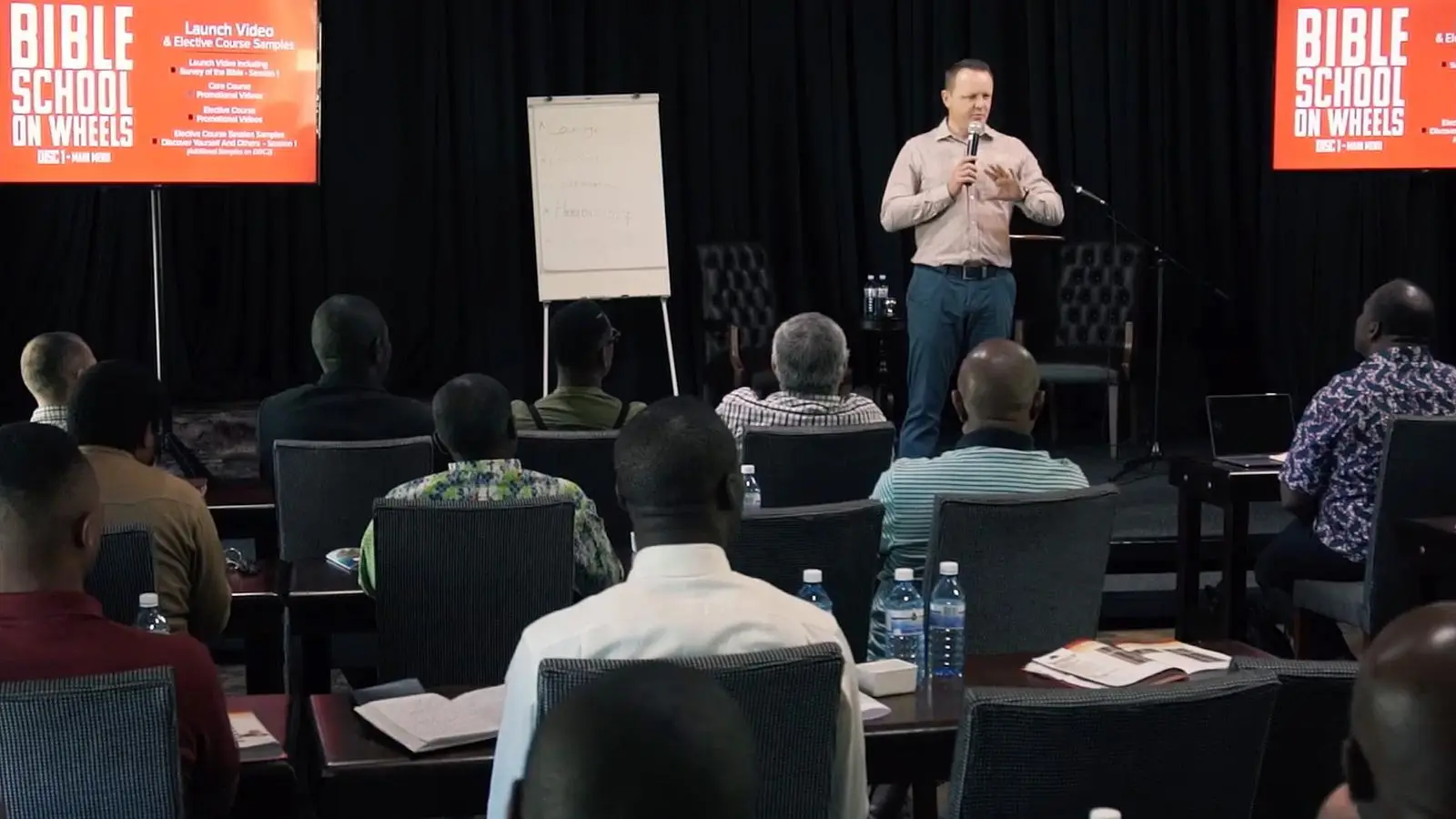
A central focus of Teach Every Nation’s mission is to provide global pastor training that equips pastors and ministry leaders with accessible, practical Bible teaching they can apply in the churches and communities they serve. This training brings biblical education closer to local congregations, helping leaders grow in their understanding of Scripture, discipleship, and faithful service without leaving their ministry context for extended periods of time. Stronger local churches depend on leaders who can understand God’s Word, teach it clearly, and help people live it.
What Global Pastor Training Means
Pastor training around the world takes many forms, but its purpose remains consistent: equip local leaders to make disciples who obey Jesus.
For some pastors, that training may happen through a structured Bible school. For others, it may happen through self-paced courses, workbooks, small-group discussion, or blended learning that combines in-person teaching with digital content. The format should serve the realities of local ministry, including work schedules, family responsibilities, travel limitations, internet access, and language needs.
Global pastor training also recognizes that pastors do not serve in identical settings. A leader in a growing city church, a rural congregation, or a new church plant may face very different questions from their community. Biblical truth does not change, yet training must be understandable, usable, and transferable across cultures.
We are committed to focusing on Bible education that leads toward practical obedience. Our goal is not simply to help people complete lessons. We want learners to understand Scripture, live what they learn, and pass it on to others.
Why Local Churches Need Equipped Pastors
Pastors shape much of what a local church learns and practices. They preach, disciple new believers, guide families through difficult seasons, develop emerging leaders, and help congregations serve their communities. When pastors have accessible Bible training, they are better prepared to lead those responsibilities with confidence and biblical clarity.
Training also helps churches develop beyond dependence on a single leader. A pastor who has learned to disciple others can identify and equip teachers, small-group leaders, youth mentors, and ministry workers. That creates a healthier pattern of shared service within the congregation.
The need is especially clear where formal theological education is difficult to access. A residential school may be too far away, too expensive, or incompatible with the demands of ongoing pastoral work. Flexible Bible training for pastors can meet leaders where they are serving while still offering deep study and application.
For pastors who desire a more in-depth educational experience, we also invite them to visit the TEN Campus for dedicated study and training they can take back to their communities.
Local Ownership and Language Access
Training becomes stronger when local leaders can guide its use. They understand the needs of their churches, the questions people are asking, and the rhythms of ministry in their communities. They can determine the setting in which a course would work best for their individual context.
Language access is equally important. Pastors teach and disciple people in the language they use every day. Multilingual, culturally transferable materials help leaders engage biblical truth clearly and communicate it naturally within their communities.
This is why global pastor training should include more than content distribution. Local leaders need resources they can understand, teach, discuss, and reproduce. Workbooks create space for reflection and application. Courses provide a common biblical foundation. Local churches provide the relationships where learning is practiced and strengthened.
Digital access can widen the reach of training, but a video alone does not form a pastor. Growth develops through Scripture, prayer, discussion, service, and the repeated practice of obedience in the life of the church.
Choosing a Training Path
Churches and ministry partners evaluating pastor training can begin with a few practical questions:
- Which leaders need training now: pastors, emerging teachers, church planters, or youth leaders?
- What biblical or discipleship needs are most urgent in the local church?
- Which language, learning format, and schedule will make participation realistic?
- How will learners discuss, apply, and share what they learn with others?
- Can the training be repeated as new leaders emerge?
Global pastor training matters because local churches need leaders who can faithfully teach God’s Word and make disciples in their own communities. When Bible education is accessible, practical, and reproducible, pastors can keep serving where God has placed them while equipping others for the work of ministry.
At Teach Every Nation, we invite churches, leaders, and ministry partners to explore training that help people learn God’s Word, live it in daily life, and pass it on.